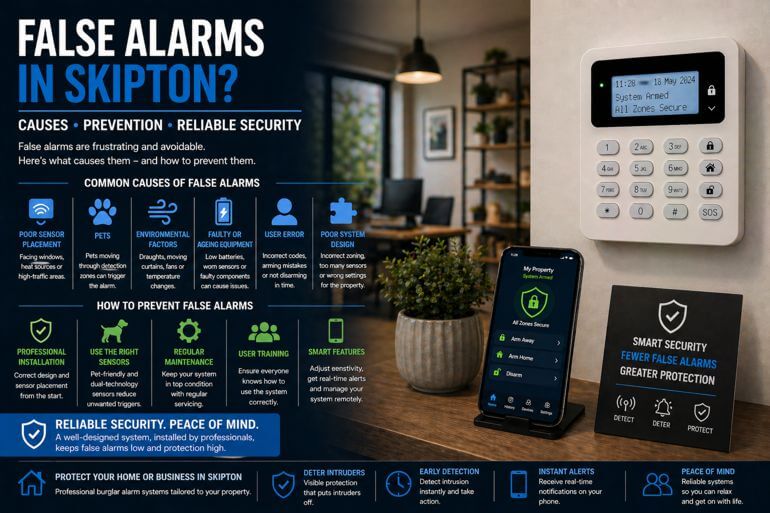
Burglar Alarms False Alarm Guide –
If you’ve ever had a burglar alarm go off unexpectedly, you’ll know how frustrating it can be. In Skipton, one of the most common concerns from homeowners and businesses is: why do burglar alarms trigger false alarms, and how can they be prevented?
The good news is that most false alarms are avoidable. With the right system design, setup and usage, they can be reduced significantly.
What is a false alarm?
A false alarm occurs when a burglar alarm is triggered without an actual intrusion. While occasional activations can happen, repeated false alarms usually point to an issue with the system, setup or environment.
What causes false alarms in burglar alarm systems?
There are several common causes:
1. Poor sensor placement
Incorrect positioning of motion detectors is one of the biggest causes.
Examples include:
- Sensors facing windows with direct sunlight
- Positioned near radiators or heat sources
- Covering areas with excessive movement (e.g. curtains, plants)
In Skipton homes and businesses, where layouts vary, correct placement is essential.
2. Pets triggering sensors
Pets moving through detection zones can activate alarms if the system is not configured correctly.
Modern systems can use pet-tolerant sensors, but these must be selected and installed properly.
3. Draughts and environmental factors
Sudden temperature changes, air movement or loose objects can trigger motion sensors.
Common issues:
- Open windows causing curtains to move
- Air vents or fans
- Temperature fluctuations in certain rooms
4. Faulty or ageing equipment
Older systems or failing components can lead to unreliable performance.
This includes:
- Worn sensors
- Low batteries in wireless devices
- Faulty wiring (in older systems)
5. User error
Incorrect operation is a frequent cause of false alarms.
Examples:
- Entering the property without disarming in time
- Incorrect code entry
- Arming the system incorrectly
6. Poor system design
Systems that are not tailored to the property can create unnecessary issues.
For example:
- Too many sensors in low-risk areas
- Incorrect zoning
- Overly sensitive settings
How do you prevent false alarms?
Professional installation
The most effective way to reduce false alarms is ensuring the system is designed and installed correctly from the start.
This includes:
- Proper sensor positioning
- Correct equipment selection
- Tailored zoning
Use the right sensors
Modern systems offer:
- Pet-friendly motion detectors
- Dual-technology sensors (reducing false triggers)
Choosing the right type for each area is key.
Regular maintenance
Servicing ensures that:
- Sensors are clean and functioning correctly
- Batteries are replaced
- System performance is maintained
User training
Making sure all users understand how to operate the system properly reduces accidental activations.
Smart system features
Modern alarms include:
- Adjustable sensitivity
- Real-time alerts
- App control
These features allow you to manage and monitor your system more effectively.
Are false alarms a serious issue?
Yes — repeated false alarms can:
- Cause disruption
- Reduce confidence in the system
- Lead to response issues if monitored
This is why prevention is important, particularly for businesses in Skipton.
Final Answer: How do you stop burglar alarm false alarms?
You reduce false alarms by ensuring your system is:
- Properly designed
- Professionally installed
- Correctly maintained
- Used properly day-to-day
For most properties in Skipton, modern smart systems combined with correct setup will keep false alarms to a minimum.